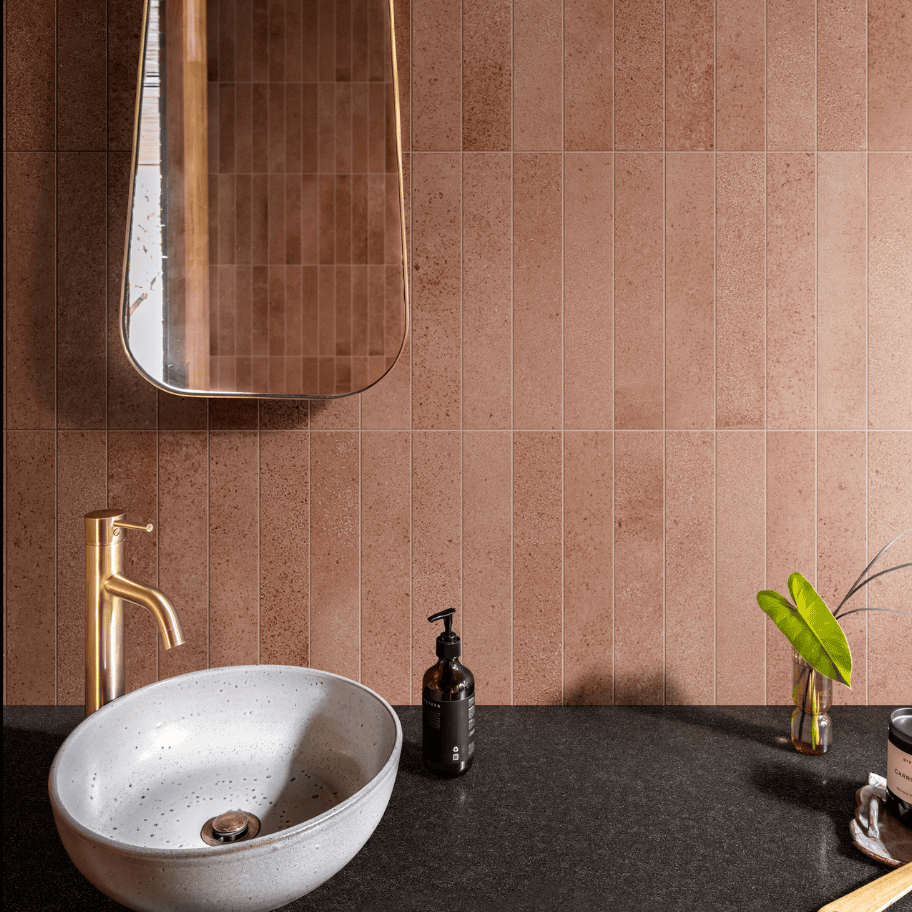
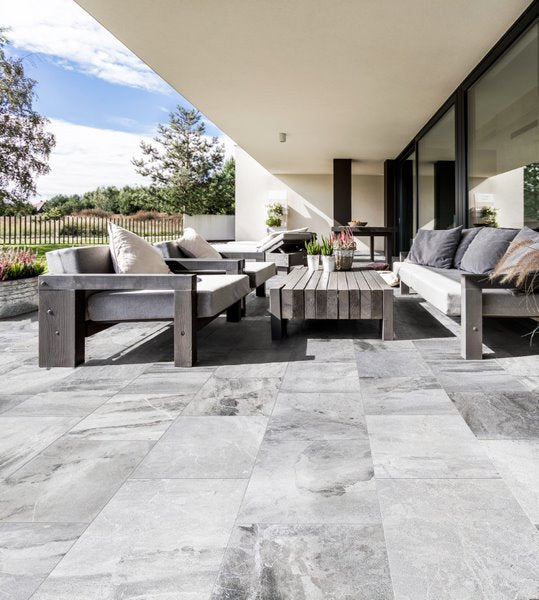
When selecting tiles for your home or commercial project, slip resistance is not just a design consideration - it's also a safety requirement. Tiles aren't just a pretty face, they play an important role to reduce the chance of slipping on certain areas. In Australia, strict standards apply to flooring wet areas, outdoor spaces and commercial environments to reduce the risk of slips and falls. Whether you're renovating a bathroom or specifying tiles for a commercial project, understanding Australian slip resistance ratings is essential.
This guide looks into slip resistant tiles in Australia, including P ratings, R ratings, testing standards and ultimately, finding the suitable tiles for your space. Generally, a tile with a Slip Resistance has a textured finish surface than a smoother tile.
Why Slip Resistance Matters
Slip resistance is critical in areas that are constantly exposed to water, moisture or high foot traffic (hallways, public areas, etc). Bathrooms, laundries, outdoor entertaining areas, pool surrounds and entryways all require careful tile selection to ensure safety and compliance.
In Australia, slip resistance testing is governed by standards using:
- Standards Australia
- AS 4586: Slip resistance classification of new pedestrian surface materials
These standards outline how tiles are tested and classified for different environments. Failure to choose the suitable slip rating in safety hazards, non-compliance with the building codes and liability issues in commercial projects (shopping centre, warehouses, industrial buildings, etc).
The better the rating, the more grippier the tile which translates to a less chance of a slip (provided that the tile is kept clean and not contaminated with other substances including water and oil).
What is the Australian Standard for Slip Resistance?
Here's a simple breakdown of the ratings (Pendulum Test):
P1: A popular choice for indoor living and kitchen tiles, they are a smooth tile with an easy to clean surface. Usually a polished or a soft-matt tile.
P2: Suitable for most indoor floors, like hallways or front entrances.
P3: A good all-rounder for most indoor areas, commercial areas, like bathrooms or the front and back porch (with a cover hanging).
P4: Textured tile ideal for wet areas like around a swimming pool.
P5: An extremely grippy, rough tile often used in specific environments such as commercial kitchens, stairs, etc. They are generally harder to clean due to its abrasive nature of the surface.
Recommended Slip Resistance for Different Areas of Home
Bathroom Floors
Minimum Recommendation: P2
For shower floors or high-use bathrooms, many homeowners opt for P3 for added safety.
Outdoor Areas
Minimum Recommendation: P4
Outdoor tiles are constantly exposed to changing conditions, including rain, pool water and environmental debris so higher slip resistance is essential.
Pool Surrounds
Minimum Recommendation: P4-P5
This is particularly important in Australian climates where pools are frequently used.
Entryways
A tile with good grip (P3-P4) helps reduce slipping during wet weather.
Floor Tile Slip Resistance Ratings Difference
The main test commonly used in Australia to assess slip resistance is the Pendulum Test (as shown above). Manufacturers may also use the Oil Wet Ramp Test and Barefoot Wet Ramp Test to determine slip resistance in different areas.
Pendulum Test (AS 4586)
This test mimics a standard shoe sole striking on a wet tile. The test measures the frictional resistance between a wet tile and a foot-shaped mass with a rubber slider that is mounted on a pendulum arm. The ratings range from P1 to P5, with the higher ratings has a lower slip risk and can be used outside, around a pool or in commercial areas.
| Pendulum Classification | Skid Resistance Value [SRV] | Slip Risk |
| P1 | 12-24 | Very high |
| P2 | 25-34 | High |
| P3 | 35-44 | Moderate |
| P4 | 45-54 | Low |
| P5 | Over 54 | Very Low |
Oil Wet Ramp Test (Appendix D of AS4586)
An Oil Wet Ramp test involves laying the tiles on a ramp and applying lubricating oil to the surface of the tiles. Testers walk on the included tiles to determine the angle at which they become unsafe.
| Slip Resistance Value | Corrected Mean Acceptance Angle (Degrees) | Slip Risk |
| R9 | 6-10 | Very high |
| R10 | 10-19 | High |
| R11 | 19-27 | Moderate |
| R12 | 27-35 | Low |
| R13 | Over 35 | Very low |
Barefoot Wet Ramp Test (Appendix C of AS586)
The Barefoot Wet Ramp Test involves testers soaking their bare feet then walking on inclined tiles sprayed with water to determine the unsafe angle. This test is relevant for tiles to be used around swimming pools, showers and change rooms.
| Slip Resistance Value | Corrected mean Acceptance Angle (Degrees) | Slip Risk |
| A | 12-18 | High |
| B | 18-24 | Moderate |
| C | Over 24 | Very Low |
Texture and Cleanability
One of the biggest misconceptions is that higher slip resistance always mean a rough, difficult-to-clean tile. Thankfully, modern tile manufacturing has evolved significantly. Many porcelain tiles now achieve high P ratings while maintaining a refined surface finish.
Are Slip Ratings Mandatory in Australia?
Yes - in most applications.
The National Construction Code (NCC) references to Australian Standards for slip resistance, particularly in commercial and public buildings. While private residential homes do not require strict certification compared to commercial projects, following the recommended slip ratings is strongly advised.
For commercial projects, compliance with AS 4586 is essential.
How to Choose the Right Slip Resistant Tiles
When selecting tiles, consider the following below:
1. Location (indoor, outdoor, wet areas)
2. Foot traffic levels
3. Exposure to water, oil
4. Residential vs commercial
5. Maintenance requirements
At FINN, we always recommend confirming the slip rating of your chosen tile before installation - especially for bathrooms, alfresco areas and pool surrounds. Reputable tile suppliers should provide documented certification.
Understanding slip resistance ratings in Australia is essential when planning your renovation or new build. Choosing the correct P or R rating ensures your space is not only beautiful but also safe and compliant. From bathrooms and kitchens to outdoor entertaining areas, selecting the right slip resistant tile protects your family, guests and clients.
If you're unsure which slip rating is appropriate for your project, speak with our team at FINN. We can guide you through various options to ensure your tile selection meets the Australian standard while still delivering on style.