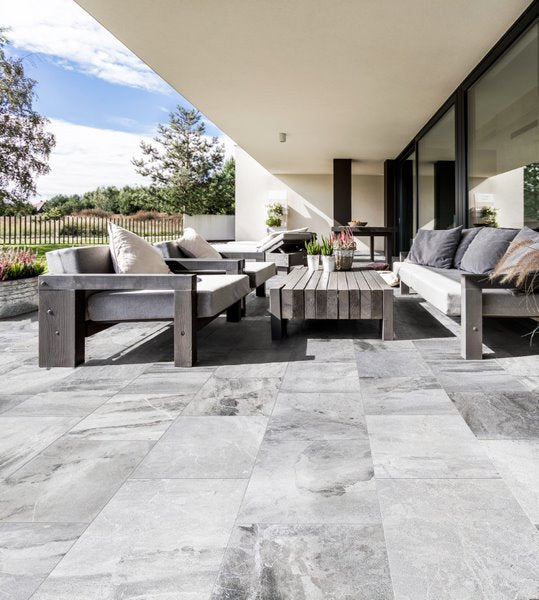
Travertine is one of the most popular natural stone choices for Australian outdoor spaces and for good reason. A durable natural limestone, formed in hot springs and has been a prestigious building material with its history dating back to 3200 BC. Renowned for its longevity, it was extensively used by Romans for iconic structures like the Colosseum and remains popular today as indoor and outdoor pavers due to its timeless, classic aesthetic.
The stone has been used across the globe for centuries due to its durability and natural, unique, hole-filled appearance. They come in warm, neutral and earthy tones due to its mineral composition. Common colours include: cream, beige, white, yellow/gold. It also appears in cooler shades such as silver, grey and occasionally pink. The versatility of travertine as pavers allow them to be used from pool surrounds to courtyards.
If you’re considering travertine pavers for your next project, this guide covers everything you need to know - including types of travertine, finishes, slip ratings, maintenance and how to choose the right option for Australian conditions.
What Are Travertine Pavers?
Travertine is a natural limestone formed by mineral-rich spring water over thousands of years. The stone is characterised by subtle movement, soft veining and naturally occurring pores, giving it an organic, understated look. The largest producers are Turkey and Italy, with significant, historic quarries located near Rome.
Travertine is extracted from surface quarries by cutting large, manageable blocks from the bedrock. Once extracted from the quarries, these raw blocks are sent to factories to be cut into smaller, usable pieces like tiles or pavers. They are processed to create desired surface texture such as: filled, honed, polished or brushed. They are finished for outdoor use, making them both durable and visually refined.
Why Travertine Is Ideal for Australian Outdoor Spaces
Travertine pavers are especially well suited to harsh Australian climates and UV rays due to their unique combination of natural, heat-resistant properties, high durability and aesthetic versatility. They can endure extreme temperature fluctuations, from hot summers to cold winters, handling heat, moisture and seasonal changes with ease. They also offer a luxurious, yet practical solution for patios, pool decks and gardens.
Naturally Cool Underfoot
One of travertine’s most valued qualities is its ability to stay cool, even in direct sunlight - making it ideal for pool surrounds, alfresco areas and courtyards. Unlike man-made materials like bluestone, travertine's unique, porous material reflects heat rather than absorbing it.
- Heat Reflection: Travertine reflects the sun's rays, keeping the surface cooler than concrete or porcelain pavers up to 20%, making a desirable option for pool areas.
- Porous Structure: The naturally occurring small holes and voids in the stone allow for air circulation, preventing the surface from heating up. The textured surface also provides excellent slip resistance, making it safe for the pool surroundings.
- Thermal Regulation: Travertine maintains a comfortable, cool touch even when temperatures reach 40 degrees, making it suitable for Australian summer.
Slip-Resistant When Correctly Finished
Outdoor travertine pavers are typically supplied in tumbled, brushed or sandblasted finishes, offering excellent slip resistance when wet. This makes them a popular choice around pools and high-traffic outdoor areas. With the right thickness and finish, travertine can also be used in light-traffic commercial applications.
Travertine Paver Finishes Explained
Choosing the correct finish is critical for both safety and appearance.
Tumbled Travertine
The process of tumbling tiles is often done with stones and water to create a rustic, weathered look with softened edges with a natural, textured surface. Features an aged, antique appearance with unfilled, pitted holes and crevices. With it's slip resistance and rustic look, this finish remains the most popular for outdoor and pool areas in Australia homes.
Brushed Travertine
Done by wire-brushing the stone, this creates a matt, slightly textured surface. Smoother than tumbled but still textured enough for outdoor use. Offers a more refined look while maintaining grip. Also suitable for indoor living.
Sandblasted Travertine
Blasting high-pressure sand or steel grit onto the surface creates this lightly textured finish. This rough, granular texture enhances slip resistance without compromising the stone’s natural variation. However this type of finish is uncommon in Australia.
How to Maintain Travertine Pavers
Travertine is a durable natural stone, but like all stone, it benefits from proper care.
Sealing
Sealing helps protect the stone from stains, moisture and weathering. Outdoor travertine should be sealed with a breathable, penetrating sealer.
Cleaning
Use pH-neutral cleaners designed for natural stone. Avoid acidic or harsh chemical products.
Ongoing Care
Regular sweeping and occasional washing will keep travertine pavers looking their best for years to come.
At FINN Tile Studio, we carefully select travertine finishes that balance aesthetics, performance and longevity. Our team can guide you through selecting travertine pavers that meet safety requirements without compromising on design.
Travertine pavers offer a perfect balance of beauty, durability and practicality for Australian outdoor spaces. When selected and installed correctly, they provide a timeless foundation that enhances both lifestyle and property value.