Choosing between tiles and marble is one of the most common (and important) decisions that Australian homeowners face when building or renovating. Both materials offer beauty, durability and long-term value but they perform differently depending on climate, lifestyle, budget and maintenance expectations.
In this guide, we break down the key differences between tiles and marble for Australian homes, covering durability, cost, maintenance, design versatility, suitability for indoor and outdoor spaces and long-term value. Whether you're renovating a bathroom in Sydney, building a coastal home in Brisbane, or designing a contemporary space in Melbourne - this comparison will help you to make the right choice.
Understanding the Materials
What are Tiles?
When we talk about "tiles," we're typically referring to porcelain or ceramic tiles. Porcelain tiles are made from refined clay fired at extremely high temperatures, making them dense, incredibly hard-wearing and highly water resistance. Ceramic tiles are slightly more porous but still considered as durable for most residential applications due to their affordability.
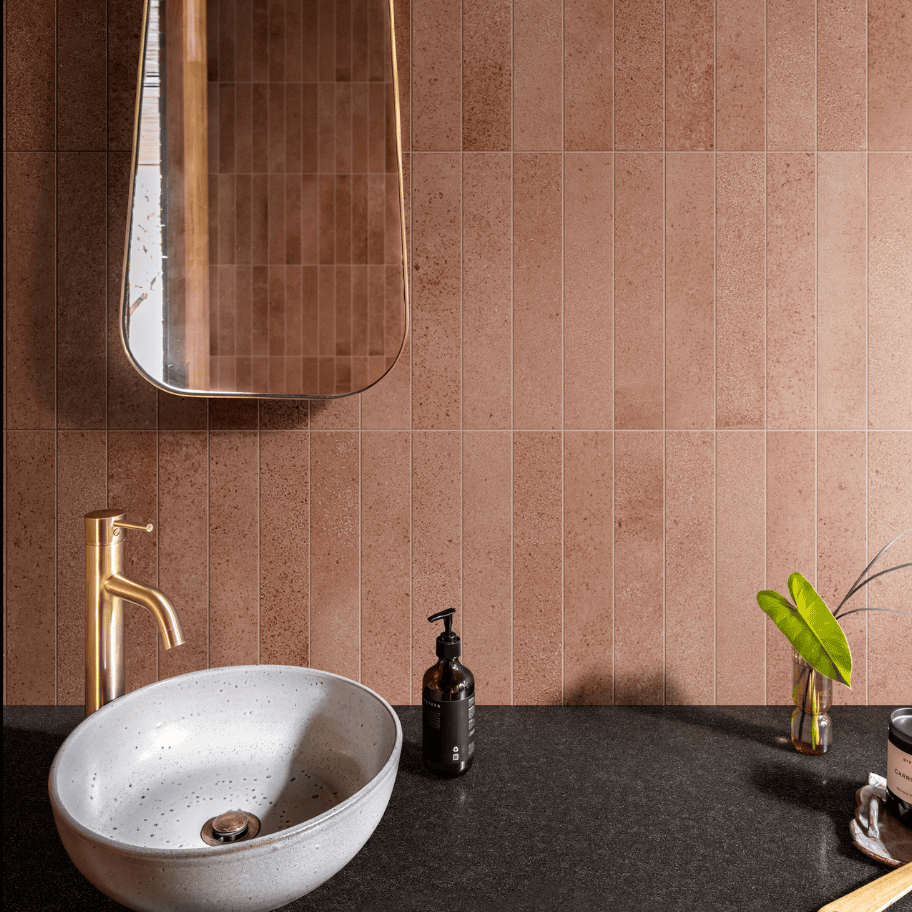
Modern manufacturing technology these days allow porcelain tiles to replicate the look of natural stone, timber, concrete and even marble in several variations and patterns - often at a fraction of the cost.
What is Marble?
Marble is a natural stone formed from limestone subjected to heat and pressure over millions of years, which makes their veining and patterns unique. Each slab is not alike each other, with distinctive veining and colour variations that cannot be replicated with modern manufacturing.
Popular varieties in Australian homes include:
- Carrara marble (soft white with grey veining)
- Travertine marble (light ivory beige and cream limestone)
- Nero Marquina marble (deep black with prominent white veins)
Marble is considered as a premium material compared to tiles and has long been associated with luxury architecture and high-end interiors in commercial spaces, including hotels and boutique stores.
Durability: How Do They Perform in Australian Conditions?
Australia's climate can be harsh - a combination of intense sun, coastal salt air, humidity and temperature changes all impact building materials.
Tiles
Porcelain tiles are:
- Extremely dense and hard-wearing
- Resistant to moisture and staining
- Less prone to scratching
- UV stable (ideal for outdoor areas)
They are considered as an excellent option for high-traffic areas like kitchens, hallways and open-plan living spaces. In coastal areas, porcelain tiles perform exceptionally well due to their low porosity. Not only that, they are considered as low maintenance compared to their natural stone counterparts.
Marble
They are softer and more porous than porcelain. It can:
- Etch when exposed to acidic substances (lemon juice, vinegar, wine)
- Stain if not properly sealed
- Scratch more easily than porcelain
While marble is durable when maintained correctly, it does require more care - especially in busy family homes with high traffic. However, they remain as a popular choice in outdoor areas, particularly around swimming pools due to their cool underfoot. For durability and low maintenance in Australian conditions, porcelain tiles typically outperform marble
Maintenance: What's Easier to Live With?
Tiles
Porcelain and ceramic tiles are extremely low maintenance. Regular sweeping and mopping with a mild cleaner is more than sufficient. They do not require sealing (in most cases) and they resist common household stains.
This makes them particularly appealing for:
- Family homes
- Investment properties
- Rental properties
- Busy kitchens
Marble
Marble often requires more attention
- Needs sealing upon installation and periodically thereafter
- Must be cleaned with pH-neutral cleaners
- Sensitive to acidic spills
- May require professional polishing over time
Most homeowners who love the lived-in patina of natural stone, this may not be a drawback at all. However, for those seeking convenience and affordability, it can become a consideration.
Cost Comparison: Budget vs Investment
Porcelain tiles are widely available at various price points. Even high-quality designer porcelain are much more affordable than natural stone. In addition to material costs, installation of porcelain tiles are more straightforward, which can reduce labour costs. Tiles also come in an array of designs and closely emulates the look of natural stone, which makes this an appealing option.
On the other hand, marble is typically more dearer due to quarrying and transportation costs (often from Italy or Turkey), natural variation and selection process, additional sealing and finishing requirements and higher installation complexity. While marble can add a touch of luxury and increase perceived property value, the upfront investment is considerably higher.
For a designer look, marble is often a premium choice. However, tiles are more budget-friendly and come in a large variety of designs to choose from.
Design & Aesthetic Appeal
This is often where the decision becomes more emotional than practical.
There is no denying that the prestige of having natural stone in your household. Its organic veining and depth creates a sense of refinement that both designers and architects love. They are often regarded as a statement piece, in which they work beautifully in bathrooms, feature walls, fireplace surrounds and as kitchen splash backs. Each slab tells a story, in which no two slabs are alike and this makes it ideal for homeowners wanting a unique appearance that marble gives.
On the other hand, modern porcelain tiles emulates the look of marble, travertine, concrete and terrazzo without the price tag of marble. Large-format tiles (such as 600x1200mm and 750x1500mm) are increasingly popular in Australian homes for creating seamless and contemporary spaces.
Not only that, tiles also offer consistency in colour and pattern, a broader range of finishes (matt, gloss, anti-slip etc) and greater flexibility for indoor and outdoor continuity. Tiles offer versatility and design flexibility whereas marble offers unmatched natural beauty.
Indoor vs Outdoor Applications
Outdoor Areas
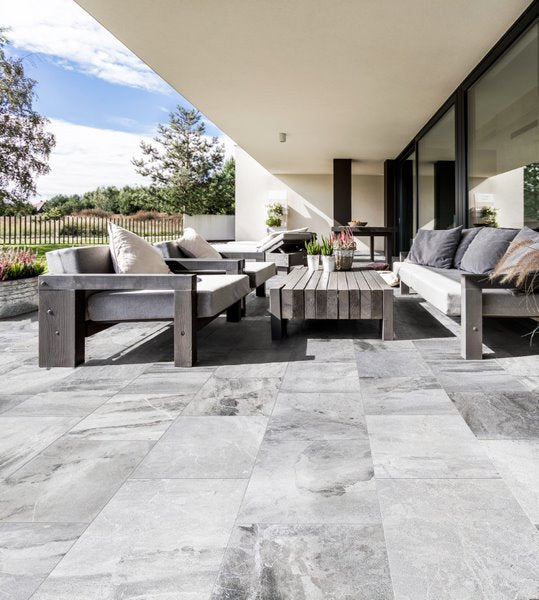
For patios, pool surrounds and alfresco zones, natural stone such as travertine or limestone are proven popular with Australian climates.
Bathrooms & Wet Areas
Both materials can be used successfully in bathrooms:
- Tiles are ideal for family bathrooms due to low maintenance
- Marble is often chosen for luxury ensuites and powder rooms
Kitchens
Kitchens are high-risk areas for spilling and staining. Porcelain tiles are typically more practical for splashbacks and floors. Marble benchtops and splash backs look stunning but do require careful maintenance. Alternatively, porcelain slabs are a cost-effective option.
So, Which One Is Best for Australian Homes?
There is no one-size-fits-all answer. The right choice depends on your:
- Budget
- Lifestyle
- Design vision
- Maintenance expectations
- Location and Climate
Choose Tiles If You:
- Want durability and low maintenance
- Busy household with high traffic areas
- Need slip resistance outdoors
- Are working within a budget
- Want consistent finishes across large areas
Choose Marble If You:
- Want a timeless, luxurious aesthetic
- Appreciate natural variation
- Are comfortable with ongoing maintenance
- Are designing a high-end or statement space
For most Australian homes, porcelain tiles provide the ideal balance of performance, cost-effectiveness and design flexibility. However, marble remains a beautiful and aspirational material that can transform a space when used thoughtfully.
In some cases, the best solution isn't choosing one over the other but combining both elements. For example, using a marble mosaic as a feature wall and opting for durable porcelain tiles for both wall and floor in a bathroom.
If you're planning a renovation or new build, we recommend seeing the materials in person, which makes all the difference. Texture, colour and scale can change dramatically depending on the lighting and the layout. By taking factor in how you live, you will make a choice that stands the test of time.